
The best skin brightening cream for Indian skin combines Niacinamide (Vitamin B3), Vitamin C, and Kojic Acid — clinically proven actives that inhibit melanin overproduction and fade dark spots — with barrier-strengthening ceramides, in a paraben-free, sulfate-free, alcohol-free formula. Applied consistently as a night cream every evening after cleansing, these ingredients work during the skin’s biological repair window, when keratinocyte cell renewal is up to 30× higher than during the day. For Indian skin (Fitzpatrick Types III–V), which is more reactive to pigmentation triggers than lighter skin types, consistent nighttime brightening care is the highest-leverage skincare step available. Visible results begin in 3–6 weeks; significant improvement in 8–12 weeks of daily use.
If you live in India — in a state like Kerala, Karnataka or Tamil Nadu or a city like Bengaluru, Kochi, or Chennai — your skin is running a marathon every single day. It faces UV radiation significantly more intense than what European skin evolved alongside, daily pollution, humidity-induced inflammation, hormonal fluctuations, and the quiet cumulative damage of urban stress. Somewhere in the middle of all of this, you are searching for a skin brightening cream that actually works — without harming your skin in the process.
This guide gives you the real science: why Indian skin produces excess melanin, which ingredients have genuine clinical evidence behind them, why overnight care is the most powerful tool in any brightening routine, and how to choose the right night cream for your skin without falling for the misleading claims that dominate the Indian beauty market. By the end, you will have a complete, actionable understanding of what brightening Indian skin actually takes — and what the most effective single product step looks like.
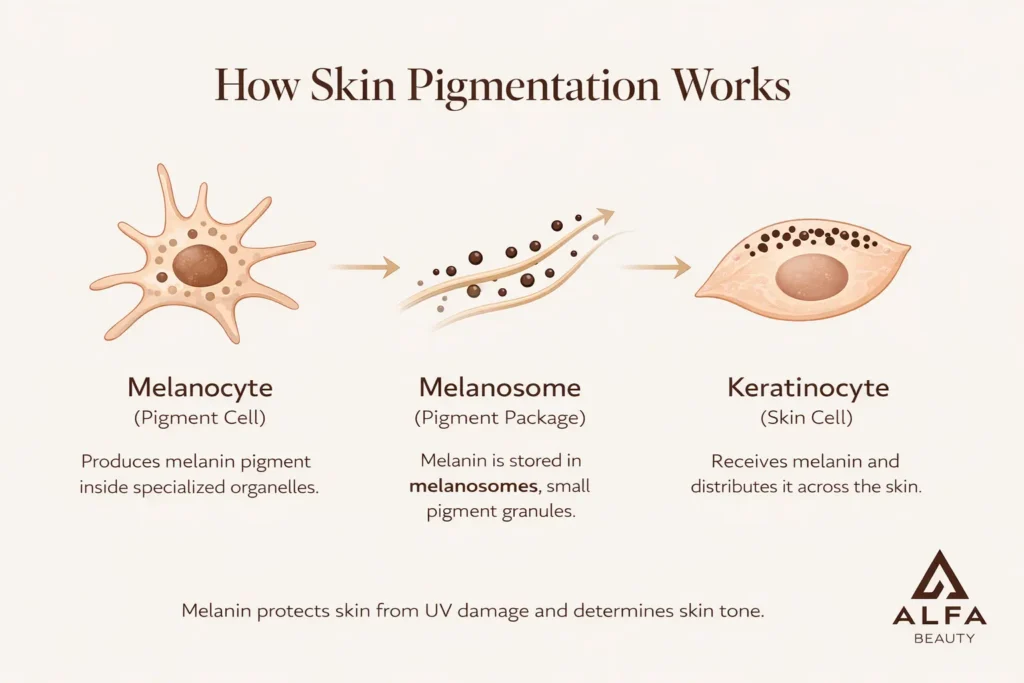
The answer starts with melanin — specifically, with how Indian skin’s relationship with melanin differs from lighter skin types, and why that difference makes standard skincare advice largely irrelevant for most Indians.
Indian skin typically falls between Fitzpatrick Skin Types III and V — a classification used by dermatologists globally to describe UV reactivity and melanin density. People in these categories possess larger melanosomes (the cellular structures that store and transfer melanin), which take significantly longer to break down once formed. The practical consequence is that a pimple that fades in two weeks for someone with Type I or II skin can leave a visible dark mark for three to six months on Indian skin. This condition — Post-Inflammatory Hyperpigmentation, or PIH — is not a flaw in your skin. It is your melanocytes doing exactly what they evolved to do: respond aggressively to damage signals.
The most common triggers driving excess melanin production in Indian skin — all of which are documented in dermatological literature — are:
These three terms appear interchangeably across Indian beauty marketing, but they describe fundamentally different outcomes — and the difference has real consequences for your skin’s long-term health.
| Term | What It Actually Means | Is It Safe for Indian Skin? |
|---|---|---|
| Skin Brightening | Enhancing natural skin radiance by fading dark spots, evening texture, and improving luminosity — without altering your actual complexion. | ✔ Yes. The goal of evidence-based skincare. Uses Niacinamide, Vitamin C, Kojic Acid, Alpha Arbutin — all clinically tested and safe. |
| Skin Lightening | Reducing localised pigmentation in specific areas (PIH, melasma patches) by inhibiting overactive melanin production in those zones. | ✔ Yes, when done with safe dermatologist-approved ingredients. Azelaic Acid and Alpha Arbutin are safe alternatives to hydroquinone. |
| Skin Whitening / Bleaching | Attempting to permanently alter natural skin tone, often using hydroquinone at high concentrations. | ⚠ Potentially harmful. Dermatologists warn that steroid-based whitening creams can cause dependency and permanent discoloration. |
The goal of a science-backed skincare routine for Indian skin is brightening — not whitening. Your natural skin tone is not a problem to be solved. Dark spots, post-acne marks, dullness, and uneven patches are — and those are precisely what a well-formulated brightening night cream addresses, without altering who you are.
Most people treat morning and evening skincare as near-identical routines in different directions. The biology says otherwise — and understanding the difference is the single biggest unlock for brightening results.
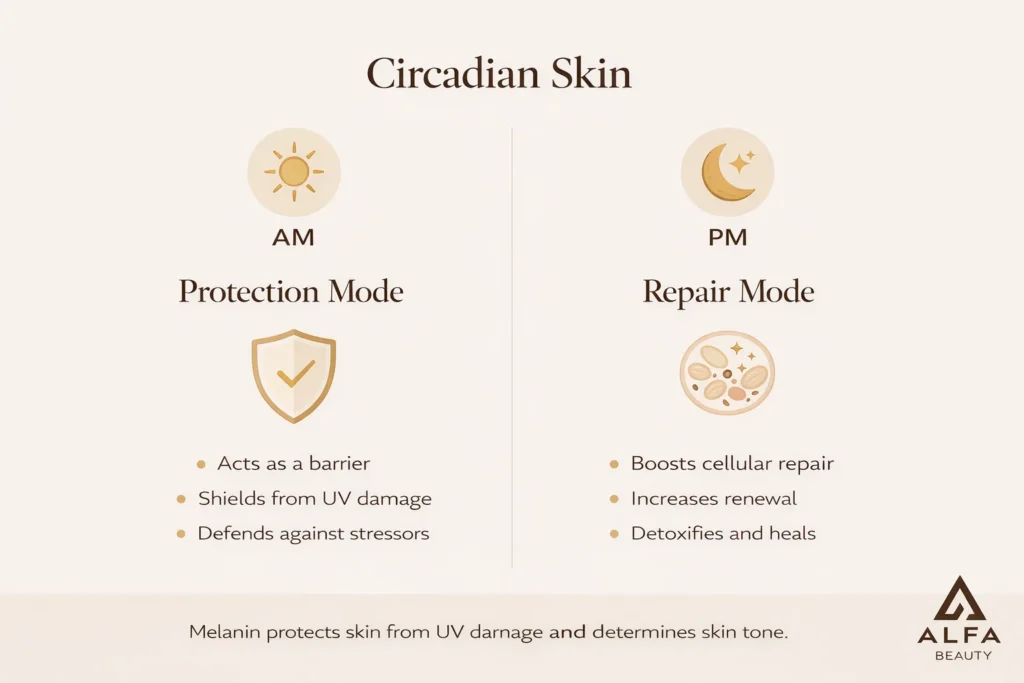
Your skin operates on a circadian rhythm, a Nobel Prize-winning biological clock that governs every cellular function in your body including your skin. Published research confirms that the skin has its own peripheral circadian oscillator, and it runs in two distinct modes:
The Indian skincare market makes sweeping brightening claims. Here is what the peer-reviewed science actually supports for Fitzpatrick III–V skin — and precisely how each ingredient works:
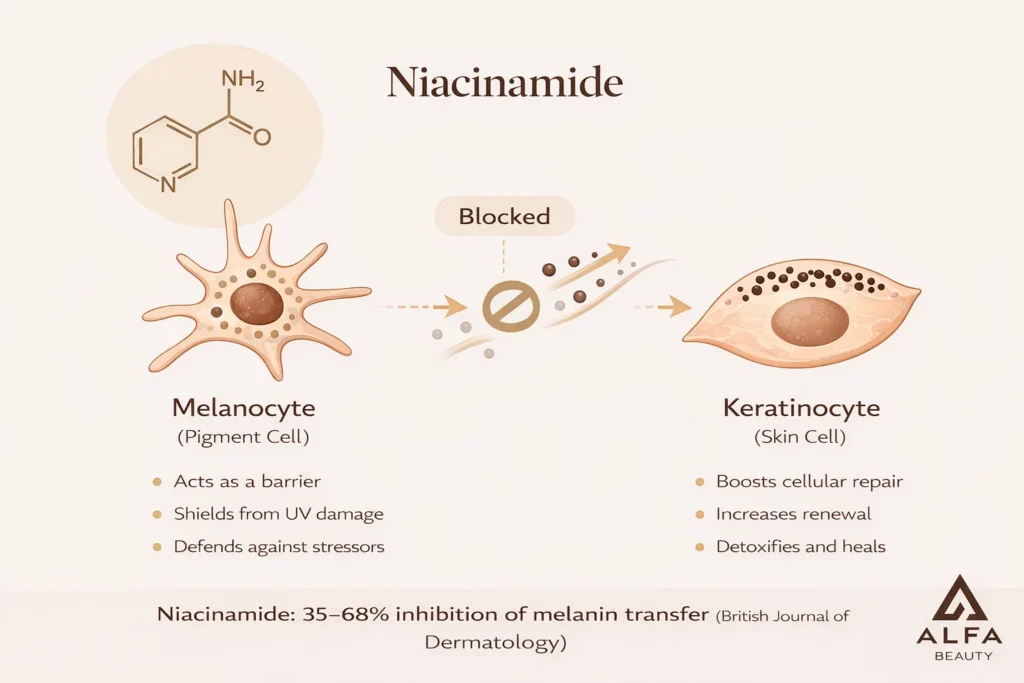
Niacinamide works through a mechanism that makes it uniquely suited to Indian skin: it blocks the transfer of melanin from melanocytes to keratinocytes — the step that makes dark spots visible on the skin surface. Critically, it does this without halting natural melanin production, meaning it does not suppress your skin’s healthy UV protection mechanisms. A landmark clinical study published in the British Journal of Dermatology found that Niacinamide produced 35–68% inhibition of melanosome transfer and significantly reduced hyperpigmentation after just 4 weeks of consistent use. A 2024 randomised clinical trial in PMC comparing Niacinamide-containing serum to 4% hydroquinone found that Niacinamide achieved equivalent melanin density reduction with significantly fewer side effects — making it the safer long-term choice for Indian skin that cannot risk the ochronosis risk of hydroquinone. A comprehensive PMC review of Niacinamide’s mechanisms further confirms its additional skin benefits: anti-inflammatory properties, barrier enhancement, and sebum regulation — all three of which address root causes of hyperpigmentation in Indian skin.
Vitamin C is the most studied antioxidant in skincare — and for Indian skin specifically, it addresses something no other ingredient does as well: the root cause of melanin overproduction. UV radiation and pollution generate reactive oxygen species (free radicals) that directly activate melanocytes. Vitamin C neutralises these free radicals before they can trigger melanin synthesis, working preventatively rather than correctively. It also inhibits tyrosinase — the enzyme that initiates melanin production — providing a second line of defence. A 2025 review in the Journal of Cosmetic Dermatology confirms that Vitamin C derivatives directly inhibit tyrosinase and neutralise UV-induced reactive oxygen species, reducing oxidative stress-driven melanogenesis. Vitamin C is most effective when applied at night, as UV exposure during the day degrades ascorbic acid on the skin’s surface before it can penetrate.
Kojic Acid is a naturally derived tyrosinase inhibitor — it blocks melanin synthesis at the enzymatic first step. Where Niacinamide prevents pigment transfer and Vitamin C prevents pigment generation, Kojic Acid inhibits the enzyme that builds melanin in the first place. This triple-mechanism approach (generate less, transfer less, fade faster) is the scientific basis for combining these actives in a single night cream formulation. Kojic Acid is particularly effective on stubborn post-acne PIH — the most persistent form of pigmentation in Indian skin — and is well-tolerated at moderate concentrations for daily use.
A naturally derived tyrosinase inhibitor considered among the safest brightening actives for long-term use on Fitzpatrick IV–V skin. A 2026 PMC review of brightening actives confirms Alpha Arbutin as an effective, low-irritation option particularly suitable for reactive or sensitive Indian skin that responds poorly to stronger actives like retinoids or AHAs.
Ceramides are not a brightening active — they are the reason brightening actives can work consistently without causing new damage. Ceramides are lipid molecules that form the skin’s barrier; when they are depleted (by UV, pollution, harsh cleansers, or age), the barrier becomes permeable to irritants. Irritants cause inflammation. Inflammation triggers melanocyte overproduction in Indian skin. The result: you treat existing dark spots while your damaged barrier generates new ones. A night cream that combines brightening actives with ceramides is not simply more effective — it is addressing the problem and its cause simultaneously.
The Indian over-the-counter brightening market contains products that are actively harmful. Dermatologists consistently flag:
A brightening routine for Indian skin does not need ten steps. It needs three — done every evening without fail:
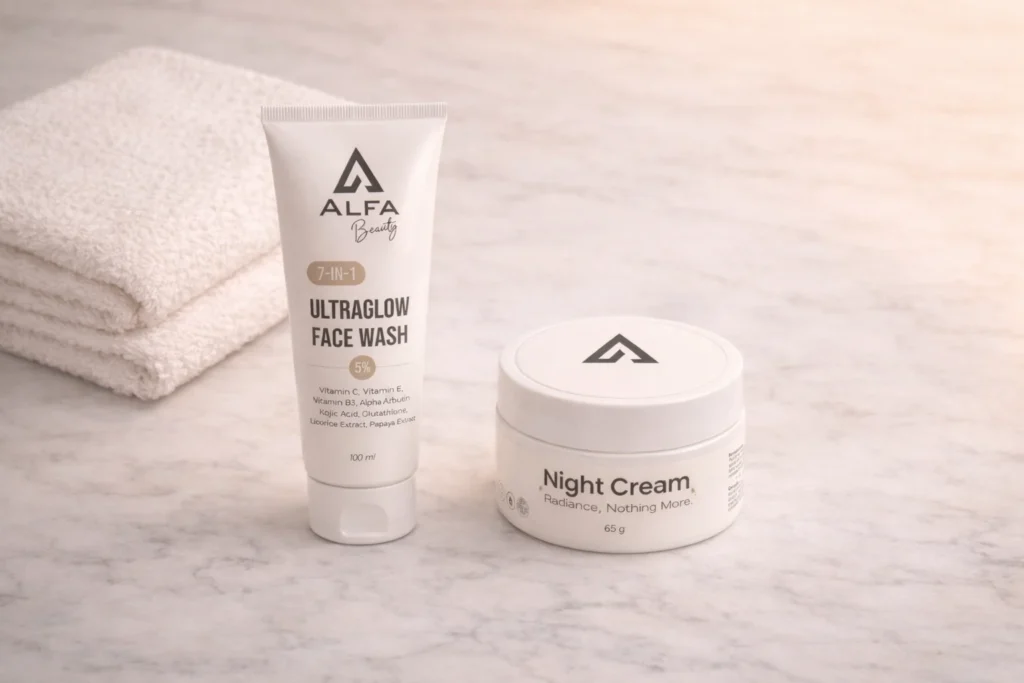
| Step | Action | How to Do It & Why It Matters | Time |
|---|---|---|---|
| 1 | Cleanse (Double Cleanse) | Use a gentle, sulfate-free face wash with lukewarm water for 60–90 seconds. Evening cleansing is the most important cleanse of the day — you are removing a full day’s accumulation of pollution, SPF, sebum, and oxidative debris. No brightening active penetrates effectively through an uncleansed surface. In humid South Indian climates, where skin absorbs airborne pollutants at higher rates, this step is entirely non-negotiable regardless of skin type. | ~90 sec |
| 2 | Optional: Hydrating Mist / Toner | A water-based mist applied to damp skin immediately after cleansing raises surface hydration and improves absorption of the night cream that follows. Optional but meaningfully improves active ingredient delivery — especially for dry or combination skin types. | ~30 sec |
| 3 | Apply Night Cream | The critical step — and the reason the rest of this guide exists. Apply on damp skin within 60 seconds of cleansing. This is the window before transepidermal water loss begins and surface hydration is highest. Use a pea-sized amount in gentle upward, outward motions. The brightening actives are now absorbed during peak skin permeability, delivered to deeper layers as nocturnal circulation increases and repair processes activate. | ~2 min |
| + | Morning SPF (AM only) | SPF is not part of the PM routine — it is the prerequisite that makes the PM routine work. UV is the primary melanin trigger. Every brightening active applied overnight can be undone within weeks by consistent unprotected UV exposure. SPF 30–50, PA++++, every single morning. | ~1 min |
The Indian skincare market makes it easy to buy the wrong product. Here is the formulation checklist that distinguishes genuinely effective, safe brightening night creams from misleading ones — and the honest explanation of why Alfa Beauty Night Cream was built around every item on this list.
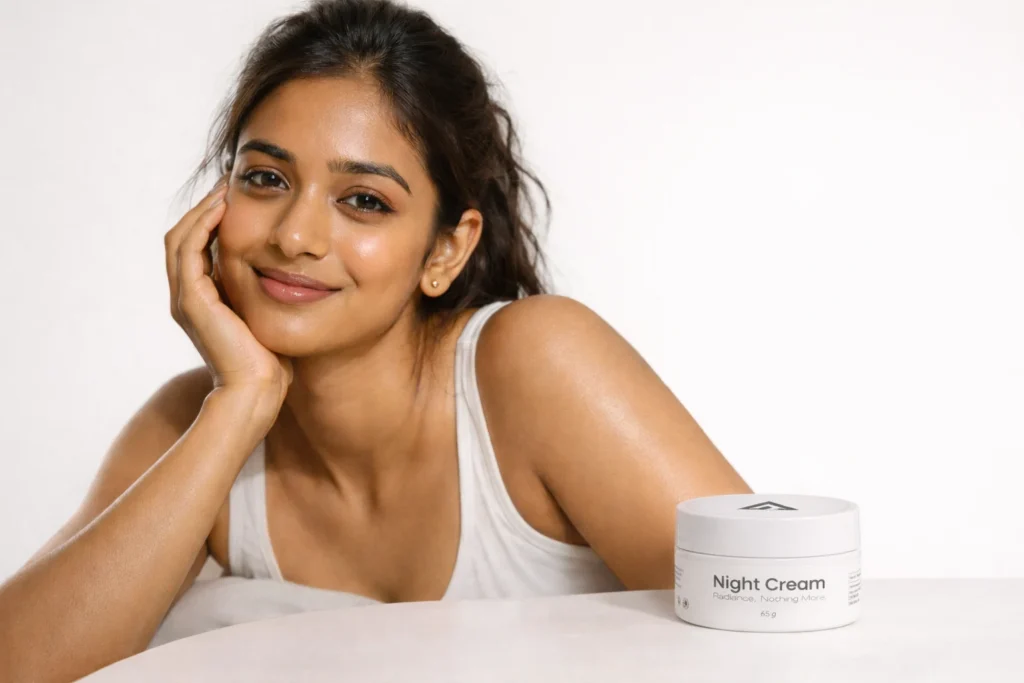
The Alfa Beauty Night Cream was not built as a generic brightening product with a few safe swaps. It was formulated from the ground up with one purpose: skin repair and overnight brightening for Indian skin. The entire ingredient selection was made with the realities of Fitzpatrick III–V skin in mind — its melanin reactivity, barrier sensitivity, response to humidity, and cumulative UV exposure.
It contains zero parabens, zero sulfates, zero silicones, zero alcohol, zero artificial colour, and zero synthetic fragrance. These are not marketing claims — they are verified formulation commitments backed by ISO certification, GMP compliance, PETA approval, and independent dermatological testing. Every active in the formulation is selected for its documented mechanism of action in skin brightening and barrier repair, and is present at a concentration that is safe for daily nighttime use on all Indian skin types.
The night cream is designed to work during the skin’s natural circadian repair window — delivering niacinamide-led melanin transfer inhibition, antioxidant-based UV damage recovery, and barrier-strengthening ceramides at the precise biological moment when Indian skin is most receptive to them. Not as a one-time treatment. As a consistent, compounding nightly investment in your skin.
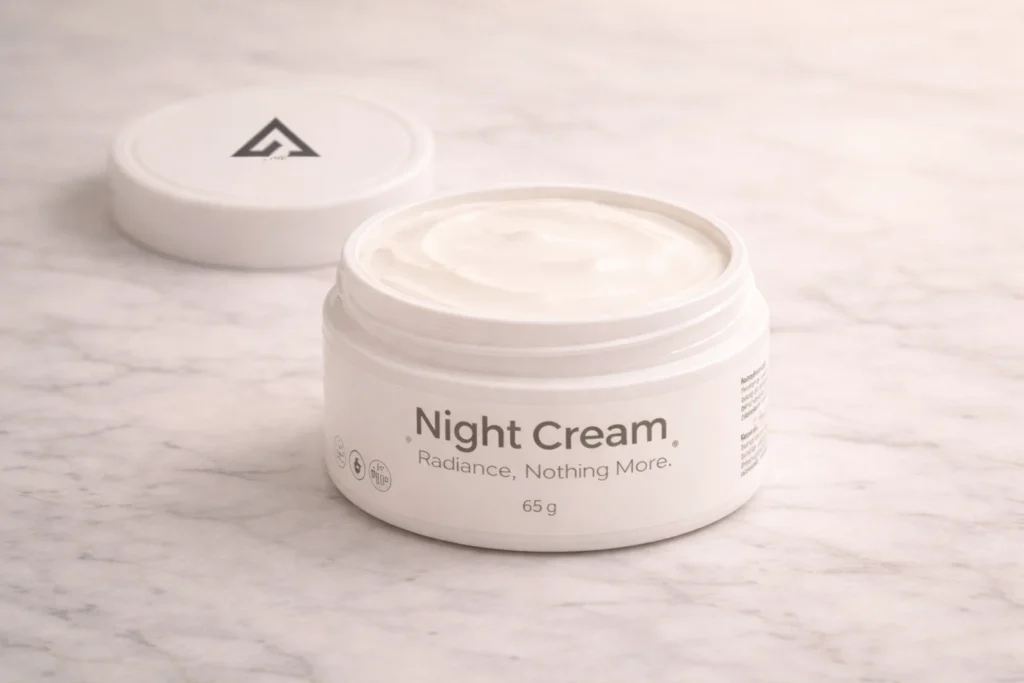
Skin Repair & Overnight Brightening — Formulated for Indian Skin
The same brightening actives work across all skin types — but the way you use them should reflect your skin’s specific characteristics. Here is what Indian skin’s most common types need:
The most damaging myth about oily skin is that it does not need a night cream. Oily skin still loses moisture overnight through transepidermal water loss, and dehydrated skin responds by producing more sebum — directly worsening oiliness over time. The right answer is not no night cream; it is a lightweight, non-comedogenic one. Niacinamide is the ideal lead ingredient for oily skin because it regulates sebum production while simultaneously brightening — addressing two of the most common oily skin complaints in a single step. Apply a thin, even layer. Your skin does not need a thick coating to benefit from the actives it contains.
Dry skin has a compromised natural barrier, which means brightening actives can cause irritation more readily than in other skin types. Prioritise ceramide and hyaluronic acid content alongside the brightening actives in your night cream. Apply within 60 seconds of cleansing — this is the critical window for trapping surface hydration before transepidermal water loss begins. A slightly more generous application than for oily skin is appropriate and beneficial.
Apply night cream across the full face, using fractionally less product on the T-zone (forehead, nose) if you are prone to congestion there. Niacinamide is the optimal ingredient for combination skin because it balances oily and dry zones simultaneously — regulating sebum in the T-zone while supporting hydration in dry areas — while delivering consistent brightening across the whole face.
Men’s skin is approximately 20–25% thicker and produces more sebum due to testosterone, but it goes through the same circadian repair cycle as any other skin. Post-shave PIH is one of the most common and most overlooked pigmentation sources in Indian men — the micro-trauma of shaving creates exactly the kind of inflammation that triggers melanocyte overproduction in Fitzpatrick III–V skin. A night cream applied after an evening cleanse, or immediately after shaving, delivers barrier-rebuilding and brightening actives during the skin’s most receptive window. The routine is simpler than most men expect: cleanse, apply night cream, sleep.
Dermatological research is consistent on this: visible improvement in hyperpigmentation requires a minimum of one full skin cell turnover cycle — approximately 28 days. Significant results compound over 8–12 weeks. Here is what consistent use of a brightening night cream actually delivers for Fitzpatrick III–V skin, week by week:
| Timeframe | What You Will Notice | What Is Happening in Your Skin |
|---|---|---|
| Days 1–7 | Skin feels calmer and less tight after evening cleansing. Morning skin looks cleaner. No dramatic visible change yet — the foundation is being laid. | Barrier begins to stabilise. Transepidermal water loss reduces as the night cream arrests overnight moisture loss. Melanocyte inflammation starts to decrease. |
| Weeks 2–3 | Reduced T-zone oiliness. Fewer new breakouts forming. Skin texture begins to smooth. | Sebum self-regulation improves as barrier is restored. Early melanin transfer inhibition begins accumulating effect at the skin’s surface. |
| Weeks 3–6 | Visible improvement in brightness and radiance. Existing dark spots noticeably lighter. Skin tone more even across the face. | Old pigmented surface cells shed through accelerated nocturnal cell renewal. Niacinamide-led melanin transfer inhibition works cumulatively. |
| Weeks 6–12 | Significant brightening and smoother texture. Substantially reduced PIH marks. Skin tone remains consistently maintained through the day. | Barrier is fully rebuilt. Collagen support improves structural quality. All three brightening actives are at their cumulative peak efficacy. |
| Month 3+ | New brightness baseline maintained consistently. Significantly fewer new dark spots forming. Skin responds better to all other products. | Healthy skin behaviour self-reinforces. The rebuilt barrier interrupts the inflammation → PIH cycle before it starts. |
The question is whether you are using it.
Every night between 9 PM and midnight, your skin’s keratinocyte renewal rate is 30× higher than during the day. Blood flow to the skin’s surface increases. Cortisol drops. Repair genes activate. Your skin is ready — biologically primed — to reverse the UV damage, pollution exposure, and inflammatory triggers it absorbed all day. What it needs from you is one well-formulated step: a night cream built with the right actives, applied within 60 seconds of cleansing, consistently, every evening.
The Alfa Beauty Night Cream was built for exactly this purpose. Niacinamide that blocks melanin transfer. Vitamin C that neutralises the free radicals causing new pigmentation. Kojic Acid that inhibits melanin synthesis at the enzymatic source. Ceramides that rebuild the barrier preventing future inflammation. Zero parabens, sulfates, alcohol, silicones, or fragrance — because none of those things belong in a cream your skin absorbs for eight hours undisturbed. ISO certified, GMP certified, PETA approved, dermatologically tested. Made in India for Indian skin, in Indian conditions, against Indian skin’s specific challenges.
The research is clear. The biology is clear. The formulation is built around both.
Shop Alfa Beauty Night Cream — ₹849 (20% OFF Launch Offer)