
The best night cream for Indian skin addresses three simultaneous concerns: Post-Inflammatory Hyperpigmentation (PIH), UV-induced dark spots, and overnight barrier repair. The ingredients with the strongest clinical evidence for Indian skin are Kojic Acid (tyrosinase inhibitor — blocks melanin production at its source), Niacinamide/Vitamin B3 (melanin transfer blocker — 35–68% inhibition in clinical studies), and Aloe Vera (barrier recovery and anti-inflammatory agent). Used correctly — applied on damp skin within 60 seconds of cleansing, every evening without exception — these actives work during the skin’s nocturnal repair window to deliver visible results in 2–4 weeks. Daily SPF is the non-negotiable morning companion that protects overnight work from UV reversal.

You have tried the creams. You have followed the routines. But every morning, the mirror still shows the same dark spots, the same dull tone, the same skin that looks like it never truly rested.
Here is the truth: most people are not using the wrong products — they are using the wrong type of product, for the wrong reasons, at the wrong time. And for Indian skin specifically, this gap between effort and result is enormous, because almost all the skincare advice available is written for climates, skin tones, and skin concerns that simply do not match Indian reality.
This guide changes that. Whether you are dealing with pigmentation, post-acne dark marks, uneven tone, or simply want to wake up to skin that looks genuinely well-rested and bright — this is the complete breakdown of how to choose the right skin brightening cream, use it correctly, and actually see results that last.
Before you spend a rupee on any cream, you need to understand what skin brightening actually is — because most of the confusion and money wasted in Indian skincare comes from conflating three very different things: brightening, lightening, and bleaching.
Skin brightening means helping your skin reach its natural, healthy radiance — correcting the dullness, dark spots, uneven patches, and post-inflammatory marks that accumulate from sun exposure, pollution, stress, and the daily wear of Indian weather. A brightening cream does not change your natural skin colour. It restores the clearest, most even version of the skin tone you already have.
Skin lightening and bleaching creams are a different and far more dangerous category. Many contain hydroquinone in concentrations above dermatologist-recommended limits, mercury compounds, or topical steroids. These ingredients deliver short-term fairness results by suppressing the skin’s natural melanin production — or in the case of mercury, by causing direct cellular damage. They are not brightening products. They are harmful ones.
The long-term risks documented in dermatology literature include skin thinning, steroid dependency, rebound hyperpigmentation (the dark spots come back darker), and in the worst cases, systemic toxicity from mercury absorption. The Indian skincare market is flooded with products that use ‘brightening’ and ‘glow’ language on the front of the pack while hiding these ingredients in the back label. The safest filter: always choose products that are dermatologically tested, free of parabens and bleaching agents, and certified by credible bodies.
Alfa Beauty Night Cream is a skin brightening product — not a bleaching or lightening one. It works with Kojic Acid, Niacinamide, and Aloe Vera — three clinically researched brightening and barrier-recovery ingredients — in a clean formulation free of parabens, sulfates, silicones, and alcohol. It is dermatologically tested, ISO certified, GMP certified, PETA-approved, vegan, and Made in India. Its purpose is to restore your skin’s natural glow — not change who you are.
This is not a generic skincare question. Indian skin operates under a distinct set of biological and environmental conditions that make an overnight brightening cream not just useful, but necessary.
Indian skin has a higher density of melanocytes — the cells responsible for producing melanin. This is an evolutionary advantage: melanin is your skin’s natural UV shield. But this same abundance of melanin makes Indian skin significantly more prone to Post-Inflammatory Hyperpigmentation (PIH) — the dark marks that form whenever the skin experiences inflammation from acne, sun exposure, friction, or minor irritation. A cut heals faster in Indian skin. The dark mark it leaves takes much longer to fade.
Also Read: The Complete Guide to Skin Brightening & Overnight Skincare for Indian Skin (2026)
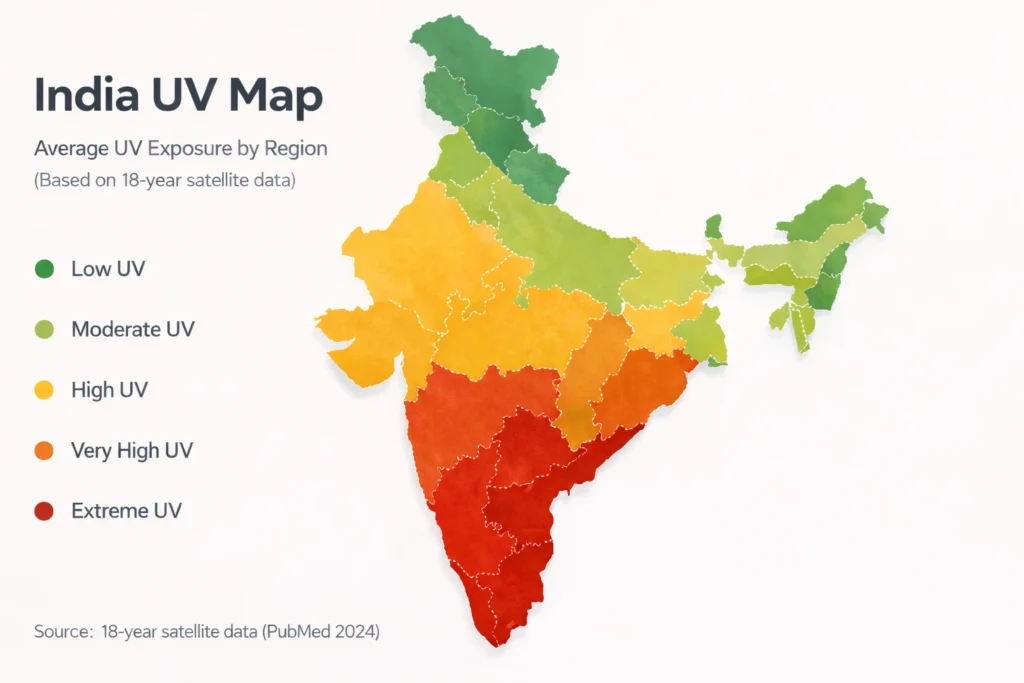
A peer-reviewed 18-year satellite study of UV Index across Kerala found that over 79% of all UV measurements fall in the ‘Very High’ or ‘Extreme’ category — not just in summer, but year-round. Higher UV is specifically recorded during March, April, and the Southwest Monsoon months. This is a daily, year-round skin tax that accumulates invisibly and shows up weeks later as dark spots, tan patches, and uneven tone.
The skin’s primary mechanism for undoing this UV damage is the overnight repair cycle — cell turnover, melanin redistribution, and collagen regeneration — that occurs at peak intensity between 10 PM and 2 AM. This is precisely the biological window that a well-formulated brightening night cream must target. It is not simply a moisturiser. It is a delivery vehicle for actives applied during the skin’s most receptive and productive hours.
Humid coastal climates cause excess sebum production. Sebum mixes with pollution particles, oxidised skin cells, and SPF residue to form a compound layer on the skin surface that — if not properly removed before bed — physically blocks the skin’s overnight repair entirely. In South India and Kerala, what you remove before bed matters as much as what you apply. This is why a brightening face wash before your night cream is not a luxury step — it is the prerequisite for every active ingredient in the cream to function at all.
The Indian skincare market has thousands of creams and most use vague ingredient claims — ‘natural extracts’, ‘vitamin-rich formula’, ‘glow booster’. The consumers who see real results are the ones who understand three specific ingredients and the published science behind them:
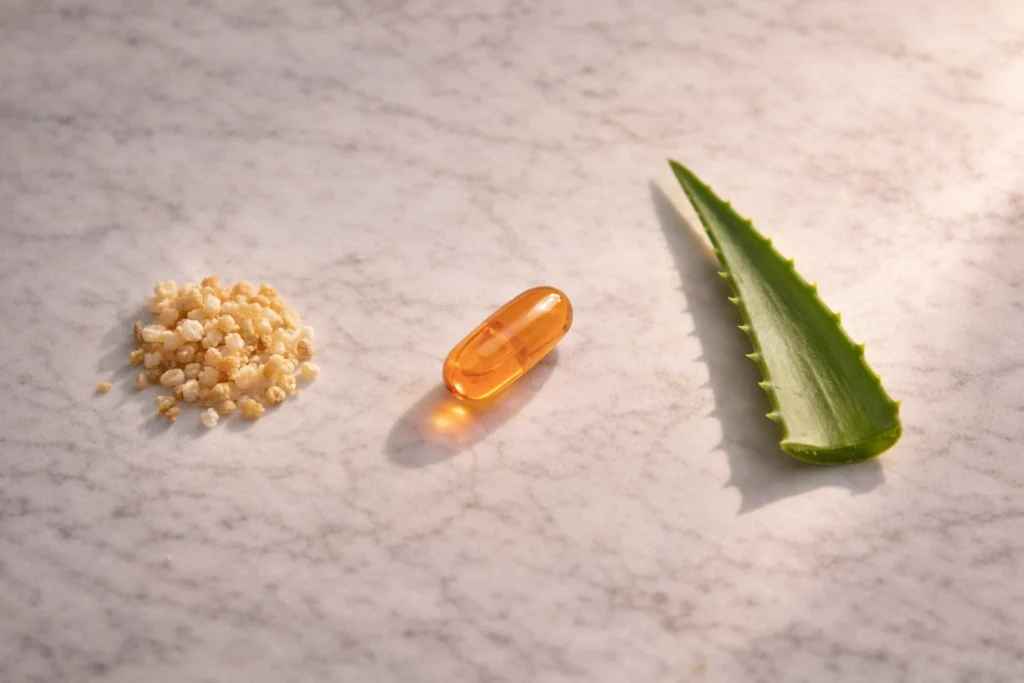
| Ingredient | Why It Works for Indian Skin | What It Treats | Backed By |
|---|---|---|---|
| Kojic Acid | Inhibits tyrosinase — the enzyme that drives excess melanin production in skin cells. Works like a dimmer switch on your skin’s pigment factory, gradually fading existing dark spots while slowing the formation of new ones. | Dark spots, post-acne PIH, sun-induced tan patches, melasma, uneven skin tone | PMC — Kojic Acid hyperpigmentation study (75% brightness increase, 83% contrast reduction) |
| Niacinamide (Vitamin B3) | Blocks the transfer of melanin from melanocytes to skin surface cells — interrupting the dark spot cycle at a different biological point than Kojic Acid. Studies show 35–68% inhibition of melanosome transfer. Also strengthens the skin barrier, reduces oil production, and calms redness. | Uneven skin tone, dullness, enlarged pores, oily skin, post-acne marks, skin redness | PubMed — Niacinamide melanosome transfer study (British Journal of Dermatology) |
| Aloe Vera | Provides deep hydration and supports overnight barrier recovery — the foundation that allows Kojic Acid and Niacinamide to work safely and consistently. Its anti-inflammatory properties reduce irritation that can trigger melanin overproduction. | Dry skin, barrier damage, post-cleansing moisture loss, redness, heat-triggered inflammation common in humid climates | PMC — Aloe vera skin barrier & anti-inflammatory study (Molecules, 2019) |
The combination of Kojic Acid and Niacinamide in a single formulation has been specifically studied for treating hyperpigmentation and PIH. A 12-week clinical study published in the Journal of Drugs in Dermatology evaluated a multi-active formulation containing 1% Kojic Acid and 5% Niacinamide (alongside Tranexamic Acid) and found statistically significant improvement in skin tone uniformity and dark spot visibility beginning as early as Week 2. The Kojic Acid and Niacinamide pairing — the two mechanisms working at different biological points simultaneously — is the ingredient science the Alfa Beauty Night Cream is built on.
Not all Indian skin is the same. Choosing the wrong texture or formula can undermine even the best ingredients. Here is how to match a brightening night cream to your actual skin type — and how Alfa Beauty Night Cream is formulated to work across all of them:
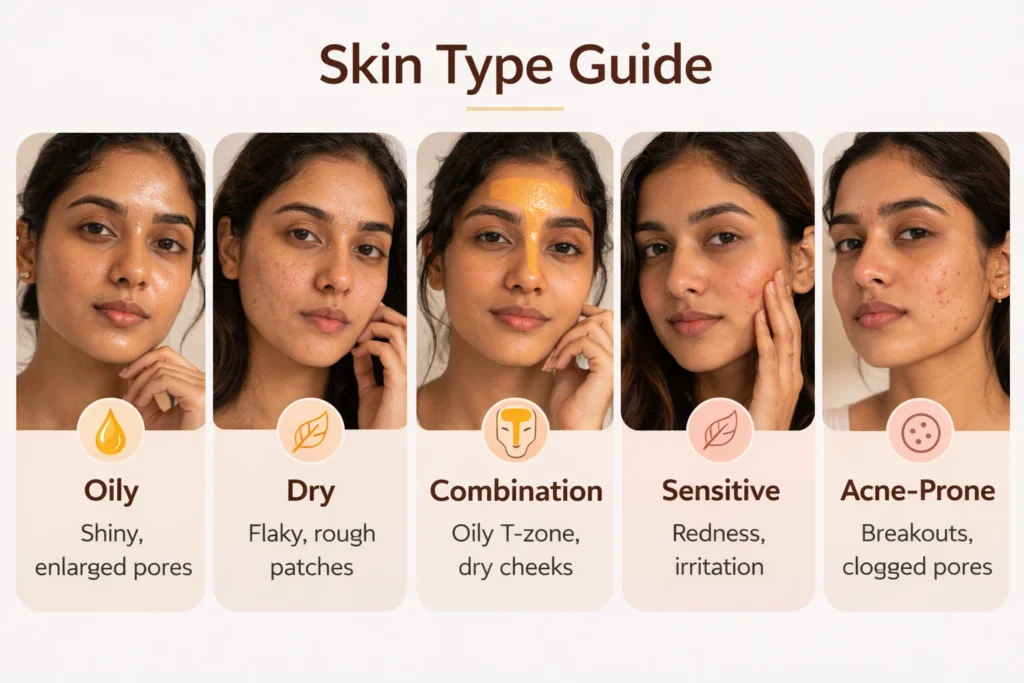
| Skin Type | What to Look For in a Night Cream | How Alfa Beauty Night Cream Works for You |
|---|---|---|
| Oily Skin | Lightweight, non-comedogenic texture. Niacinamide as a key ingredient — it actively regulates sebum production over time. No heavy oils, silicones, or occlusive agents that block pores overnight. | Non-comedogenic and free of silicones and heavy oils. Niacinamide helps regulate excess oil with consistent use. Use a pea-sized amount for best results. |
| Dry Skin | Richer cream texture with hydrating agents like Aloe Vera, glycerin, or ceramides. Must create a light occlusive barrier to prevent moisture loss overnight, especially under air conditioning. | Aloe Vera in the Alfa Beauty Night Cream provides deep hydration and supports barrier recovery. Apply while skin is still slightly damp from cleansing to lock in moisture. |
| Combination Skin | A balanced formula that hydrates dry areas without overloading oily zones. Niacinamide is ideal — it regulates oil on oily patches while hydrating dry zones simultaneously. | Apply lightly on the T-zone and more generously on dry patches and dark spot areas. The Niacinamide-forward formula handles both zones without compromising either. |
| Sensitive Skin | Free of alcohol, parabens, sulfates, artificial fragrance, and high-concentration acids. Dermatologically tested. Gentle actives at safe clinically validated concentrations. | Contains no alcohol, parabens, sulfates, or artificial fragrance. Dermatologically tested. For first-time users, begin with every other night for the first two weeks, then build to nightly. |
| Acne-Prone Skin | Non-comedogenic. Niacinamide is the gold-standard ingredient — reduces acne inflammation and prevents the PIH dark marks that form after every breakout. Avoid creams with heavy fatty oils. | Non-comedogenic formula. Niacinamide targets post-acne dark marks — the most common and persistent concern for Indian acne-prone skin. Suitable during active breakouts and after. |
Not all Indian skin is the same. Choosing the wrong texture or formula can undermine even the best ingredients. Here is how to match a brightening night cream to your actual skin type — and how Alfa Beauty Night Cream is formulated to work across all of them:
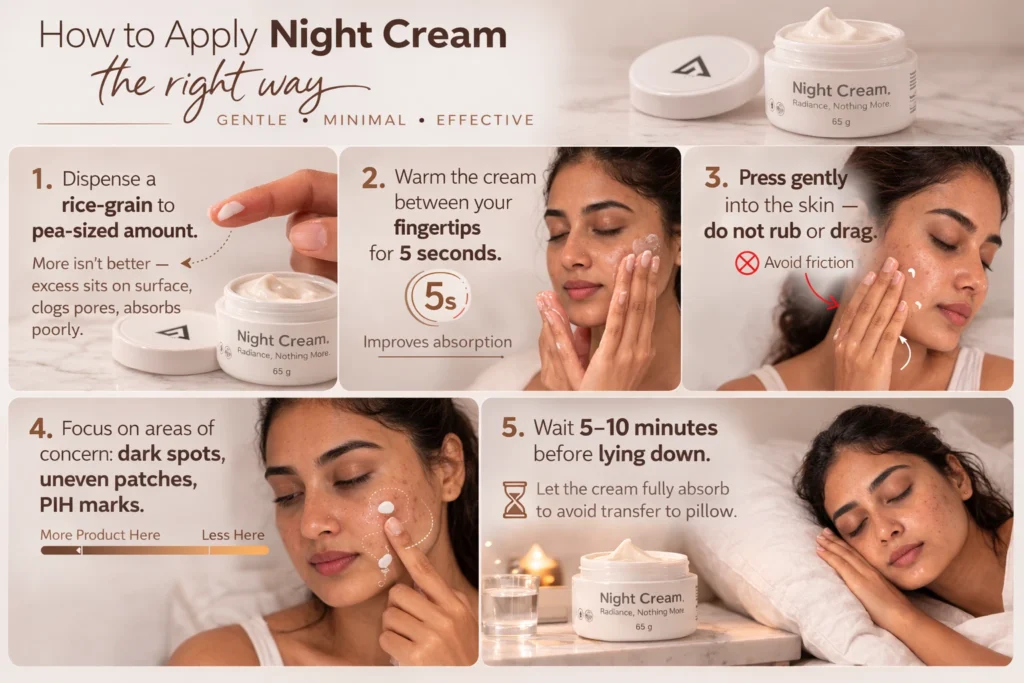
Buying the right cream is only half the equation. How you use it — and what you do before and after — determines whether you see results in 3 weeks or 3 months. Here is the correct process:
The night cream’s active ingredients — Kojic Acid, Niacinamide, Aloe Vera — need to reach your skin cells to work. If you apply them over a layer of SPF, pollution, oxidised sebum, and the day’s accumulated surface damage, those ingredients spend their time trying to penetrate a barrier instead of treating your skin.
For Indian skin in South India and Kerala — where the combination of high-SPF daytime use, humidity-driven sebum, and urban pollution creates a compound surface barrier — a quick rinse does not cut it. Use a gentle, sulfate-free face wash, massaging it in for a full 45 to 60 seconds before rinsing with cool to lukewarm water.
After cleansing, your skin is in its most permeable state for approximately 60 seconds. The surface is clear and receptive. Applying your night cream in this window gives active ingredients the deepest possible access to the skin layers where pigmentation is produced and barrier repair occurs. Wait 10 minutes and that window closes significantly.
Everything your night cream worked to repair can be undone in 20 minutes of unprotected morning sun. Kojic Acid specifically increases UV sensitivity — because reducing melanin reduces your skin’s natural UV shield. As established in peer-reviewed reviews of Kojic Acid’s mechanism, this is an inherent property of tyrosinase inhibition: less melanin means less natural photoprotection. SPF 30 minimum (SPF 50 strongly recommended for South India and Kerala) every single morning is not a product recommendation — it is the seal on your overnight repair work. Without it, you are investing nightly and losing it daily.
The biggest reason people abandon a good skincare routine is unrealistic expectations set by social media. Here is an honest, research-based timeline for consistent daily use of a Kojic Acid + Niacinamide night cream on Indian skin:
| Timeline | What You Will Notice | What Is Happening in Your Skin |
|---|---|---|
| Days 1–7 | Skin feels more hydrated and softer by morning. Redness and surface irritation (if any) begin to calm. No visible brightening yet — completely normal. | Barrier repair phase. Aloe Vera and Niacinamide begin rebuilding the skin's protective lipid layer. Transepidermal water loss reduces. |
| Week 2–3 | Skin tone begins to look more even. The "tired" or "grey" appearance from accumulated dullness starts to lift. Early reduction in surface darkness visible in natural light. | Kojic Acid’s tyrosinase inhibition begins accumulating effect on new melanin production. Niacinamide measurably reduces melanin transfer to surface cells. |
| Week 4–6 | Visible reduction in existing dark spots and PIH marks. Skin appears brighter in photos. This is when most users notice the Kojic Acid + Niacinamide combination producing clear measurable results. | Old pigmented surface cells are shed through accelerated nocturnal cell turnover. Supported by clinical studies showing improvement beginning from Week 2 onwards. |
| Month 2–3 | Consistent, lasting improvement in tone, texture, and dark spot visibility. Deeper PIH continues to fade. Skin barrier noticeably stronger and less reactive. | Cumulative effect of all three actives working in parallel. Barrier is substantially rebuilt and the skin generates fewer new PIH marks from daily triggers. |
| Month 3+ | Maintenance phase. Dark spots continue to fade. New spots form more slowly. Skin now has a noticeably different baseline appearance than when you started. | Healthy skin behaviour becomes self-reinforcing. The rebuilt barrier interrupts the inflammation → PIH cycle before it can begin again. |
You now have a clear picture of what a brightening night cream needs to deliver for Indian skin. Here is precisely how the Alfa Beauty Night Cream is formulated to deliver it — and why each decision in the formula traces directly to the science above:
| What Indian Skin Needs | How Alfa Beauty Night Cream Delivers It |
|---|---|
| Dark spot and PIH reduction | Kojic Acid inhibits tyrosinase — blocking excess melanin production at the enzyme source. Supported by the PMC hyperpigmentation study showing 75% brightness increase and 83% contrast reduction. This addresses the root cause of India's most common skin concern. |
| Skin tone evening | Niacinamide (Vitamin B3) blocks melanin transfer to surface cells. Clinical studies show 35–68% inhibition of melanosome transfer, visibly evening skin tone with consistent use. Research comparing Niacinamide with Hydroquinone confirms comparable efficacy with significantly fewer side effects. |
| Barrier recovery overnight | Aloe Vera provides deep hydration and supports the skin’s natural healing process — rebuilding the barrier that UV, pollution, heat, and humidity damage. A healthy barrier prevents inflammation that generates new dark spots. |
| Clean, safe formulation | Zero parabens. Zero sulfates. Zero silicones. Zero alcohol. Zero artificial fragrance. Dermatologically tested, ISO certified, GMP certified, PETA-approved, vegan, and made in India. |
| All Indian skin types | Non-comedogenic and suitable for oily, dry, combination, sensitive, and acne-prone skin. Dermatologically tested for Indian skin conditions and climate factors. |
| Honest, consistent results | No overnight miracles. No steroid shortcuts. No bleaching agents. Real results from three research-backed ingredients — visible in 2–4 weeks with consistent use and daily SPF protection. |
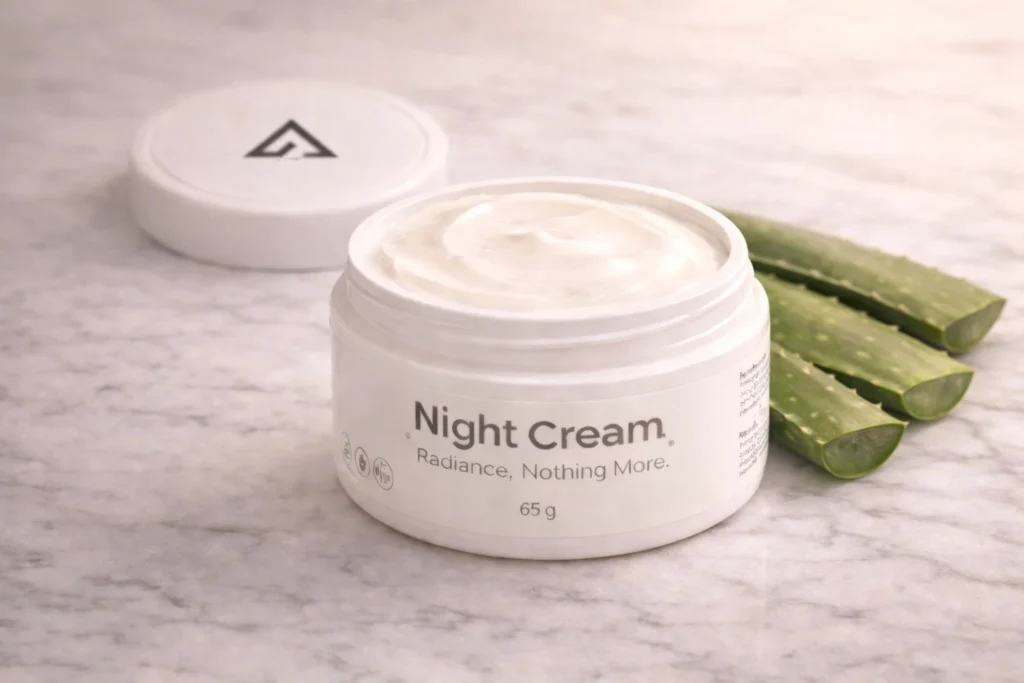
Kojic Acid + Niacinamide + Aloe Vera — Made for Indian Skin
The best skin brightening cream for Indian skin is not the most expensive one, the most marketed one, or the one with the most promises on the pack. It is the one with the right ingredients for Indian skin’s specific concerns — Kojic Acid, Niacinamide, and barrier-recovery actives like Aloe Vera — in a clean, safe, dermatologically tested formulation that you can use every single night without worry.
Indian skin in South India and Kerala is navigating UV levels, humidity, pollution, and a genetic predisposition to post-inflammatory hyperpigmentation that most skincare brands never bother to design for. Alfa Beauty does. Every decision in the Night Cream’s formulation — the ingredient selection, the paraben-free and silicone-free base, the Aloe Vera for barrier support, the dermatological testing — is made for the specific realities of Indian skin.
The routine is simple. Cleanse properly. Apply Alfa Beauty Night Cream within 60 seconds of drying. Give it a minimum of 28 days. Wear SPF every morning without exception. There is no shortcut that outperforms consistency.