
The two skin brightening ingredients with the strongest clinical evidence for Indian skin (Fitzpatrick III–VI) are Kojic Acid and Niacinamide — and they work better together because they target different points on the melanin pathway. Kojic Acid inhibits tyrosinase (blocks melanin production at the enzyme level). Niacinamide blocks melanosome transfer (stops produced melanin from reaching the skin surface). A 2025 clinical study from Hinduja Hospital, Mumbai confirmed significant improvements in skin radiance, lightening, and hydration in Indian patients within 45 days using a Kojic Acid-based combination. Vitamin C (morning, antioxidant + tyrosinase inhibition) and Aloe Vera (barrier recovery) complete the full-day system. Glutathione has modest topical evidence but IV glutathione carries serious safety risks and is not approved in India for skin brightening.
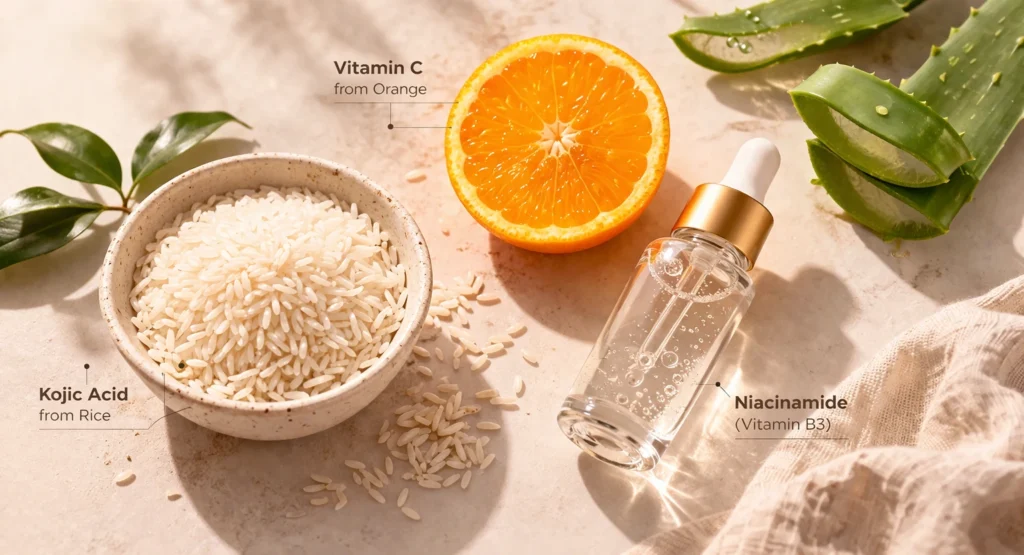
Walk into any Indian pharmacy or scroll through any skincare feed and you will find dozens of products all claiming to brighten, glow, and even out Indian skin. Most list the same three or four ingredients. A handful of them work. The rest are riding the coattails of clinical research they have never conducted on the specific ingredients they use, at the specific concentrations that actually produce results.
This guide is for the person who has been promised glow by too many products and wants to understand, once and for all, which brightening ingredients have real clinical evidence behind them — specifically for Indian skin. Not for Korean skin. Not for European clinical trials. For Fitzpatrick Types III through VI, dealing with post-inflammatory hyperpigmentation, year-round high UV exposure, and a skincare market flooded with products that overpromise on results and underdeliver on safety.
Seven ingredients are covered. Some have decades of clinical evidence. Some have modest but real evidence. Some have almost none, despite appearing in every trending skincare conversation. Each gets an honest verdict — and a clear answer on where it fits in a routine for Indian skin.
Kojic Acid | Niacinamide | Vitamin C | Aloe Vera (Aloesin) | Alpha Arbutin | Azelaic Acid | Glutathione
Ranked by quality of clinical evidence for Indian skin. No brand agenda. No hype. Plus: why ingredient combinations consistently outperform any single active — and what the 2025 IJORD clinical study from Hinduja Hospital, Mumbai confirmed about the right combination for Indian skin.
Also Read:
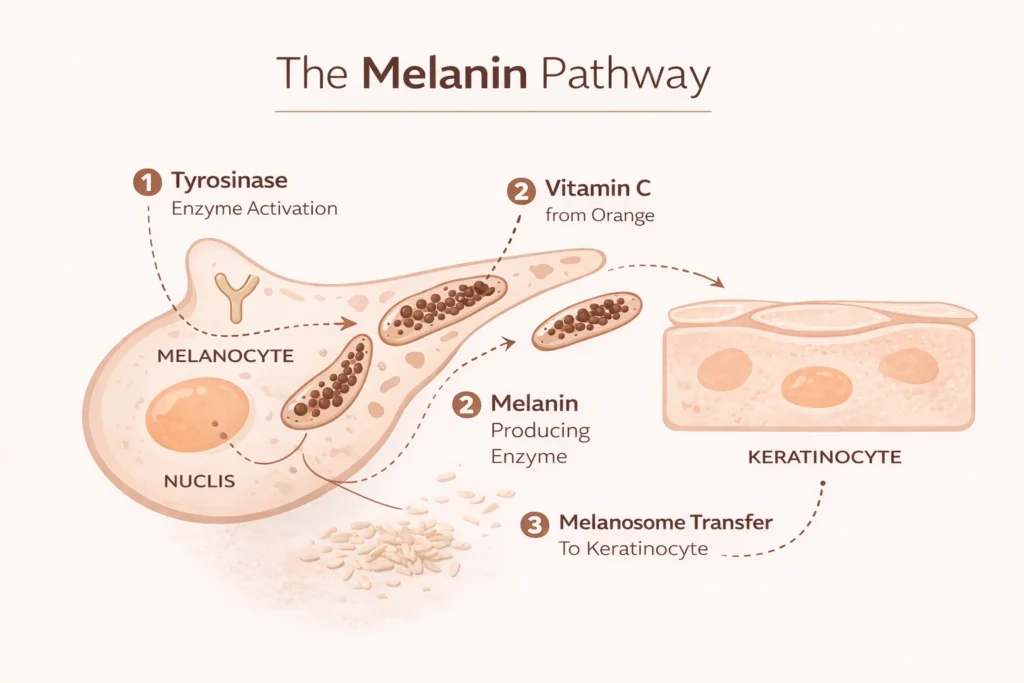
Before comparing ingredients, it helps to understand the three points on the melanin pathway where brightening actives can intervene. Every effective ingredient targets at least one of these. The most powerful formulations target more than one — which is why combination studies consistently show superior results to single-ingredient studies for Indian hyperpigmentation.
| Intervention Point | What Happens | Which Ingredients Work Here |
|---|---|---|
| Tyrosinase Inhibition | Tyrosinase is the enzyme that converts tyrosine into melanin. Blocking its copper active site stops melanin synthesis at the source — before any pigment is produced. | Kojic Acid, Vitamin C, Alpha Arbutin, Azelaic Acid, Aloe Vera (Aloesin) |
| Melanin Transfer Inhibition | Melanosomes carry finished melanin from melanocytes to surface keratinocytes. Blocking this transfer stops melanin reaching the skin surface even after it has been produced. | Niacinamide — primary mechanism. 35–68% inhibition confirmed in head-to-head RCTs. |
| Oxidative Stress Neutralisation | UV rays generate free radicals that trigger the inflammatory cascade causing PIH. Neutralising them upstream prevents dark spot formation before it starts — critical for Indian skin exposed to high UV year-round. | Vitamin C (primary mechanism for this step) — most effective as a morning active during UV exposure hours. |
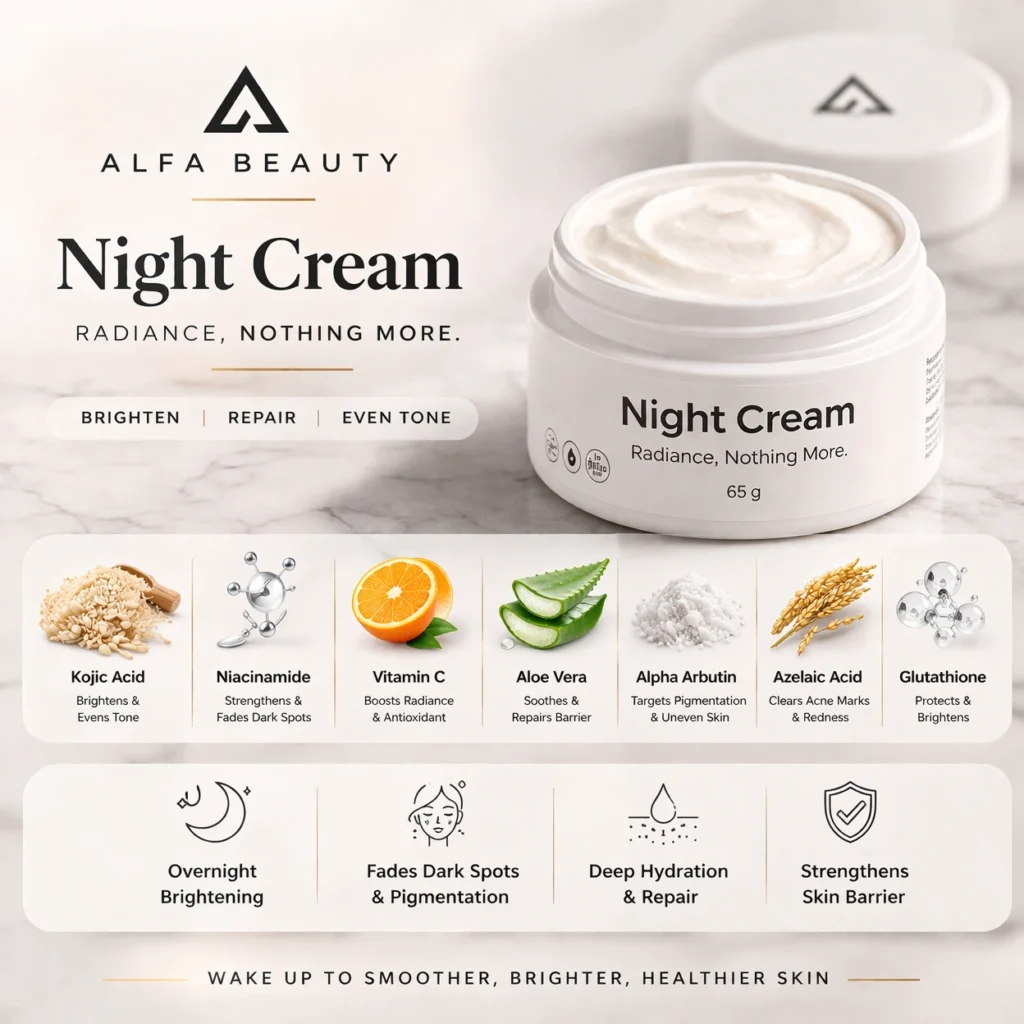
A formulation that covers all three intervention points simultaneously is biologically more powerful than any single-ingredient product. This is the core principle behind the combination approach in Alfa Beauty Night Cream and the evidence basis for why multi-active studies consistently show superior results for Indian skin hyperpigmentation.
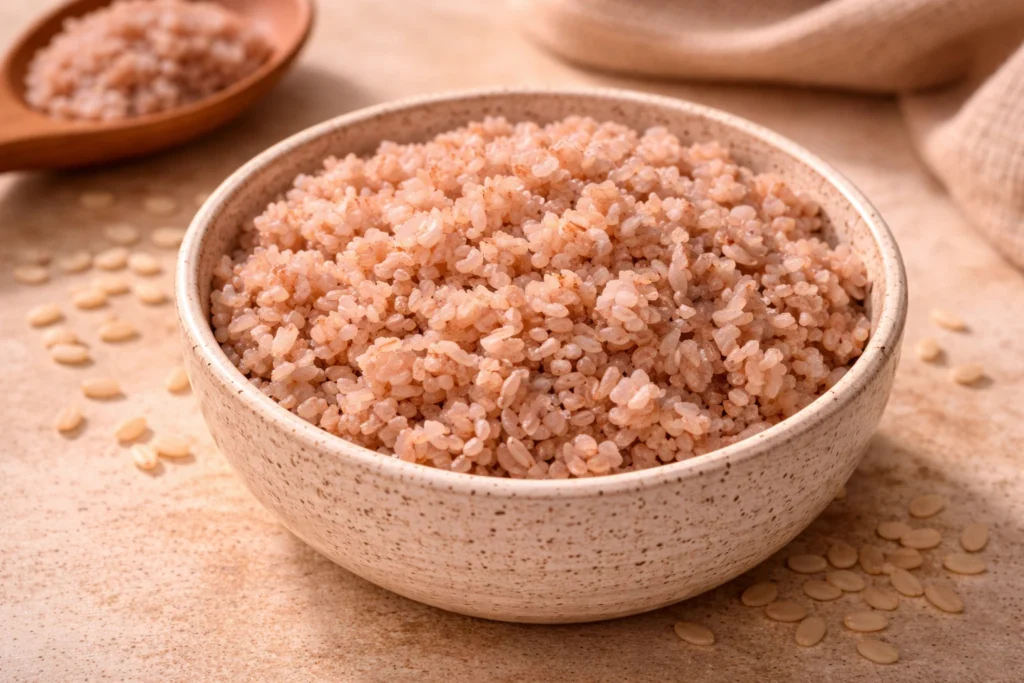
Kojic Acid is produced during fermentation of Aspergillus oryzae fungi — the same organism used in rice wine and soy sauce production. As a brightening agent, it is a copper chelator: it binds to and disables the copper ions that activate tyrosinase, blocking melanin production at the enzyme level.
What sets Kojic Acid apart in the Indian context is its clinical evidence base in Indian patient populations specifically. Most brightening ingredient studies are conducted on mixed or primarily Western populations. Kojic Acid has Indian-specific RCT data — which is rare and significant.
A 2023 PMC hyperspectral imaging study documented 75% skin brightness improvement and 83% reduction in pigmentation contrast with consistent Kojic Acid use. An RCT conducted specifically in Indian melasma patients found Kojic Acid comparable to hydroquinone in efficacy with significantly better tolerability. The 2025 clinical study from Hinduja Hospital, Mumbai published in IJORD evaluated a Kojic Acid + Alpha Arbutin combination on Indian patients specifically and found significant improvements in skin radiance, lightening, gloss, and hydration within 45 days.
Niacinamide is the only clinically proven brightening ingredient that works at the melanosome transfer step — blocking melanin that has already been produced from ever reaching the skin surface. This makes it uniquely complementary to Kojic Acid, which works upstream at the production step. Together they cover two completely different intervention points on the same pathway.
A landmark study in the British Journal of Dermatology found Niacinamide produced 35–68% inhibition of melanosome transfer with visible reduction in hyperpigmentation at 4 weeks. A double-blind RCT comparing 4% Niacinamide against 4% Hydroquinone found statistically comparable efficacy with significantly fewer adverse effects — making it the safer long-term choice for Indian skin. A 2021 PMC mechanistic review confirmed Niacinamide simultaneously strengthens the skin barrier, regulates sebum, reduces redness, and supports collagen synthesis — making it the most multi-beneficial brightening active for Indian acne-prone skin, where every breakout leaves PIH behind.
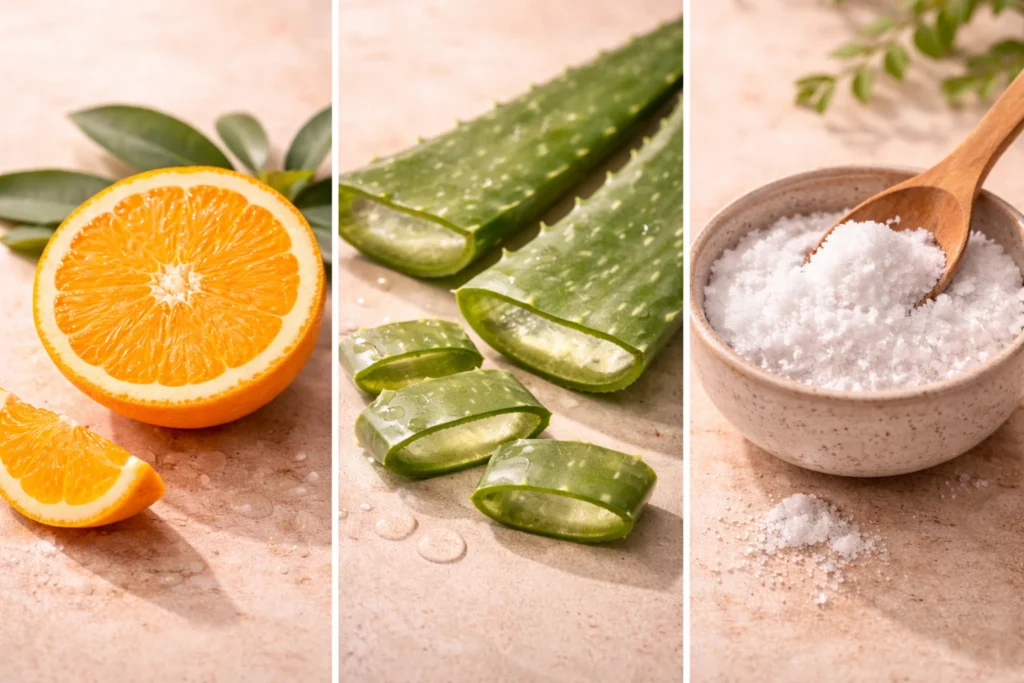
Vitamin C is the most widely discussed brightening ingredient in Indian skincare and one of the most clinically validated. It inhibits tyrosinase — like Kojic Acid — and simultaneously neutralises UV-generated reactive oxygen species, making it most valuable as a morning ingredient that protects against the primary UV trigger of PIH in Indian skin.
A PMC review of cosmeceuticals for hyperpigmentation found 58% reduction in PIH over 8 weeks at 15% L-Ascorbic Acid. The critical caveat for Indian skin: pure L-Ascorbic Acid oxidises rapidly in South India’s heat and humidity — a yellowed Vitamin C product has zero active benefit. Stabilised derivatives — Sodium Ascorbyl Phosphate, Ascorbyl Glucoside — are more practical for daily reliable use under Indian climate conditions.
Aloe Vera’s active brightening compound is aloesin — a chromone glucoside that inhibits tyrosinase through both competitive and non-competitive pathways, adding a third point of tyrosinase inhibition alongside Kojic Acid and Vitamin C. A PMC study on natural cosmetic ingredients found aloesin alone reduced UV-induced hyperpigmentation by 34%, and aloesin combined with arbutin reduced it by 63.3%. Beyond brightening, Aloe Vera’s acemannan polysaccharide accelerates barrier recovery — directly reducing the skin inflammation that triggers new PIH. This dual role — brightening and simultaneously preventing the inflammation cycle that generates new dark spots — makes it a uniquely important base ingredient for Indian skin formulations.
Alpha Arbutin is a glycosylated form of hydroquinone that inhibits tyrosinase with a significantly better safety profile than hydroquinone itself. The 2025 IJORD study from Hinduja Hospital, Mumbai — conducted specifically on Indian patients — found an Alpha Arbutin + Kojic Acid combination produced significant improvements in radiance, skin lightening, gloss, and hydration within 45 days. The JCAD systematic review of natural ingredients for hyperpigmentation found arbutin produced statistically significant improvement in a melasma RCT versus placebo. For Indian skin new to active brightening, Alpha Arbutin is a gentler starting point than Kojic Acid with fewer sensitisation concerns.
Azelaic Acid is a saturated dicarboxylic acid derived from Pityrosporum ovale fungi, also found naturally in grains. It inhibits tyrosinase and carries meaningful anti-inflammatory and antibacterial properties — making it particularly relevant for Indian acne-prone skin where PIH is driven by both melanin overproduction and ongoing acne inflammation simultaneously. A comparative Indian melasma study found Kojic Acid and Vitamin C combination performed better overall in efficacy, but Azelaic Acid showed a superior safety profile with fewer side effects. It is a useful secondary or adjunct ingredient rather than a primary brightening active for most Indian skin types.
Glutathione inhibits tyrosinase and shifts melanin production from darker eumelanin toward lighter pheomelanin — a plausible mechanism with moderate clinical support for topical and oral use. A 2025 systematic review in the International Journal of Dermatology found topical 0.5% glutathione produced measurable brightening versus placebo, and oral glutathione (250mg daily) showed reduction in melanin index in five RCTs — but results were rated moderately efficacious and unsustainable, reversing when treatment was stopped.
⚠ WARNING: These Ingredients Are Harmful — Not Brightening
The test: any brightening product for Indian skin should list its complete ingredient profile and carry ISO, GMP, and dermatological testing certification. Alfa Beauty Night Cream meets all of these.
The complete honest comparison across every factor that matters when choosing brightening ingredients for Indian skin:
| Ingredient | Melanin Pathway Step | Evidence for Indian Skin | Daily OTC Use | Climate Stability (South India) |
|---|---|---|---|---|
| Kojic Acid | Tyrosinase inhibition | A — Indian patient RCTs + 2025 Hinduja Hospital Mumbai | Yes — 1% in leave-on | Good — stable in formulations |
| Niacinamide | Melanosome transfer inhibition | A — multiple head-to-head RCTs vs hydroquinone | Yes — 2–5% | Excellent — heat and humidity stable |
| Vitamin C | Tyrosinase + free radical neutralisation | B+ — strong; stability caveat | Yes — check freshness; use stabilised derivatives | Poor (pure L-AA) / Good (stabilised derivatives) |
| Aloe Vera (Aloesin) | Tyrosinase (competitive + non-competitive) + barrier support | B — strong complementary evidence | Yes — as base ingredient | Excellent — inherently stable |
| Alpha Arbutin | Tyrosinase inhibition | B — Indian clinical study 2025 (Hinduja Hospital) | Yes — 1–2% | Good |
| Azelaic Acid | Tyrosinase + anti-inflammatory | B — strong for acne-PIH dual concern | Yes — 15–20% (mostly prescription) | Good |
| Glutathione | Tyrosinase + eumelanin shift | C+ — moderate topical; IV unapproved in India | Topical/oral only (medical supervision for oral) | Moderate — degrades in heat/light |
For Indian skin dealing with PIH — the most common dark spot type — the strongest evidence points to Kojic Acid + Niacinamide used together. The logic is direct: Kojic Acid blocks melanin at the production step; Niacinamide blocks it at the transfer step. Two different intervention points on the same pathway — which means results that are not just additive but synergistic. The 2025 Hinduja Hospital Mumbai IJORD study confirms Kojic Acid combinations produce significant improvements in Indian skin within 45 days. For daily use without a prescription, Kojic Acid + Niacinamide at 1% and 2–5% respectively — as formulated in Alfa Beauty Night Cream — is the most clinically supported OTC starting point for Indian skin.
| Your Primary Skin Concern | Best Starting Ingredient | Why | Secondary Add-On |
|---|---|---|---|
| Post-acne dark marks (PIH) — oily or combination skin | Niacinamide (2–5%) | Addresses PIH + regulates sebum + reduces acne inflammation simultaneously. One ingredient, three problems. | Kojic Acid in night cream — blocks fresh melanin from new breakouts |
| Deep-set or older dark spots (more than 6 months old) | Kojic Acid (1% in leave-on) | Tyrosinase inhibition at source. Most potent OTC-accessible active for stubborn pigmentation. | Niacinamide to clear melanin already in the pipeline |
| Sun tan or UV-induced pigmentation (forehead, cheekbones) | Vitamin C (morning) + Kojic Acid (night) | Vitamin C neutralises UV free radicals during the day. Kojic Acid suppresses melanin production overnight. | Niacinamide to block melanosome transfer — covers the stage the other two don’t |
| Sensitive skin with frequent redness and PIH | Alpha Arbutin or Niacinamide first | Both are gentler entry points than Kojic Acid for reactive skin. Build tolerance before introducing stronger actives. | Aloe Vera as base for barrier support and anti-inflammatory protection |
| Melasma (hormonally triggered, symmetrical patches) | Kojic Acid + SPF 50 (mandatory) | Tyrosinase inhibition is most effective for melanocyte hyperactivity driving melasma. | Consult dermatologist if no improvement after 12 weeks — dermal melasma may need clinical intervention |
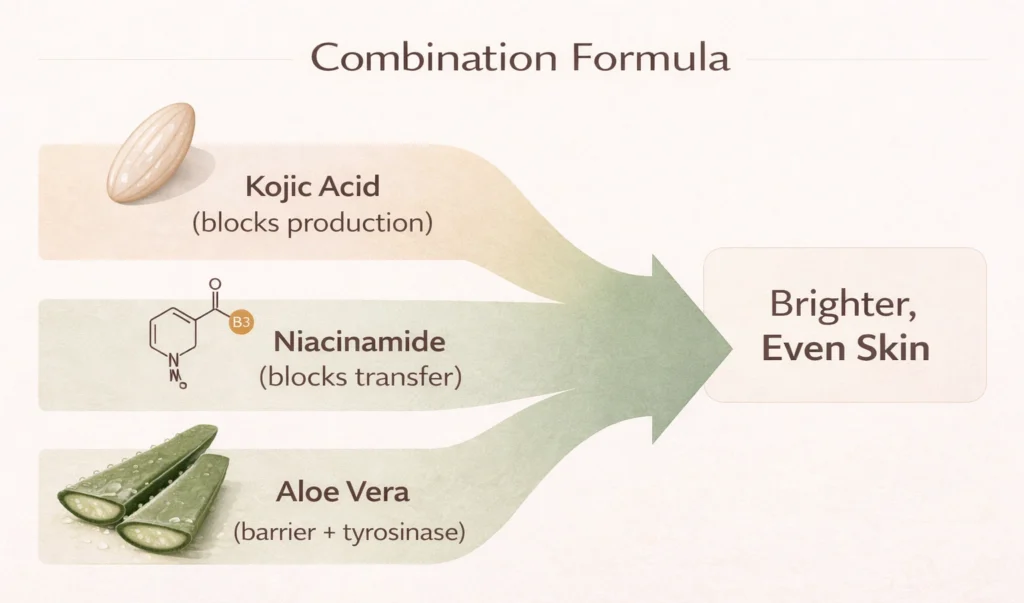
The melanin pathway has multiple steps. A product that blocks only one step — no matter how potently — leaves every other step fully open. This is why the most consistent clinical finding across skin brightening research is that combination formulations outperform single-ingredient approaches.
A 12-week clinical study published in the Journal of Drugs in Dermatology evaluated a multi-active facial serum containing 3% Tranexamic Acid, 1% Kojic Acid, and 5% Niacinamide on subjects with melasma and PIH. The study found significant improvements in hyperpigmentation from Week 2 of daily application, with 60% average improvement in melasma and 81% reduction in PIH at 12 weeks — validating the multi-point combination principle. The JCAD systematic review of natural ingredients for hyperpigmentation confirmed this across multiple ingredient categories: combinations with complementary mechanisms consistently outperform mono-ingredient approaches.
Three ingredients. Three different points on the melanin pathway. This is not a marketing stack — it is the formulation logic of an effective combination approach, supported by clinical evidence from multiple published studies.
Whether skin brightening is safe long-term for Indian skin depends entirely on which ingredients are used. Kojic Acid at 1% in leave-on formulations has a favourable 2024 Cosmetic Ingredient Review safety assessment. Niacinamide at 2–5%, Aloe Vera, and Alpha Arbutin at 1–2% all have well-established daily-use safety profiles. The unsafe category includes high-dose hydroquinone (ochronosis risk on Fitzpatrick III–VI skin), OTC corticosteroids (barrier thinning, steroid dependency), mercury compounds, and IV glutathione at high doses. A simple test for any Indian brightening product: it should list its full active ingredient profile transparently, and carry ISO, GMP, and independent dermatological testing certification.
| Ingredient | Evidence Grade | Role in the Formula | Clinical Basis |
|---|---|---|---|
| Kojic Acid | A — Indian RCTs | Primary tyrosinase inhibitor. Blocks melanin production at the enzyme level. Most effective in leave-on night application with full overnight contact time without UV competition. | PMC 2023 | Indian RCT | IJORD 2025 |
| Niacinamide | A — Head-to-head RCTs | Melanosome transfer inhibitor. Blocks produced melanin from reaching the skin surface. Also regulates sebum, strengthens barrier, and reduces redness — addressing multiple PIH triggers. | BJD RCT | vs HQ RCT | PMC 2021 |
| Aloe Vera (Aloesin) | B — Strong complementary evidence | Third tyrosinase inhibition point (competitive + non-competitive via aloesin) plus barrier recovery via acemannan. Prevents inflammation → PIH cycle while supporting the actives to work safely and consistently. | PMC Natural Cosmetics | PMC Aloe Vera Review |
Dermatological research is consistent on this: visible improvement in hyperpigmentation requires a minimum of one full skin cell turnover cycle — approximately 28 days. Significant results compound over 8–12 weeks. Here is what consistent use of a brightening night cream actually delivers for Fitzpatrick III–V skin, week by week:
Kojic Acid + Niacinamide + Aloe Vera — Made for Indian Skin
Seven ingredients. Four honest verdict tiers. One clear conclusion for Indian skin.
Kojic Acid and Niacinamide sit at the top because they have the broadest, most specific, and most recent clinical evidence for Indian skin — including the 2025 Hinduja Hospital Mumbai study on Indian patients, an Indian patient melasma RCT, and a 12-week multi-active combination study confirming multi-point formulations outperform single-ingredient approaches. Vitamin C, Aloe Vera, and Alpha Arbutin have strong complementary evidence and belong in a complete routine. Azelaic Acid is valuable for the acne-plus-PIH dual concern. Glutathione has modest topical evidence and significant unanswered safety questions for IV use.
The most important principle: the melanin pathway has multiple steps, and a routine that targets more than one step simultaneously will always outperform any single ingredient — no matter how well that ingredient works alone. Build your routine around complementary mechanisms, not just popular names.
The best skin brightening cream for Indian skin needs to target tyrosinase inhibition (Kojic Acid), block melanosome transfer (Niacinamide), support barrier recovery (Aloe Vera), and contain none of the harmful agents — steroids, mercury, alcohol, parabens — that create new damage while treating existing pigmentation. Alfa Beauty Night Cream is formulated around exactly this combination: Kojic Acid + Niacinamide + Aloe Vera in a completely clean base. Dermatologically tested. ISO and GMP certified. PETA-approved. Vegan. Made in India. Rs.849 at launch.